Where it matters
Grassroots Sport
Community and amateur athletes bear the highest concussion burden — yet have the least access to objective diagnostics. GLIA Diagnostics is developing tools designed for every level of sport, not just the elite.
The access gap in community sport
In professional sport, dedicated medical staff, imaging suites, and neuropsychologists are standard. At the grassroots level — school sport, community clubs, amateur competitions — none of that exists. A volunteer coach or a concerned parent is often the only person making the call.
Yet participation rates at the community level dwarf elite sport. In Australia alone, millions of children and adults play contact sport each weekend without access to a single objective concussion diagnostic tool.
The result is a systematic under-detection of brain injury at the population level — with long-term consequences that are only beginning to be understood.

The scale of the problem
~3M
Australians participate in organised community sport annually
80%+
Of sport-related concussions occur outside elite or professional competition
50%
Of concussions in youth sport are estimated to go undiagnosed
0
Objective point-of-care biomarker tests currently available on the community sideline

The diagnostic gap
No doctor on the sideline
Current concussion assessment relies on observational tools — the SCAT6, HIA protocols, symptom checklists — that require trained clinicians to administer reliably. At the grassroots level, that expertise simply is not there.
Coaches and parents are left making high-stakes decisions with subjective information, under pressure from players, families, and competition schedules. The incentive to return a player to the field is often stronger than the evidence to keep them off it.
A rapid, objective, blood-based test — if validated for this setting — could change that equation entirely, removing subjectivity and providing a clear, defensible basis for decision-making by non-clinicians.
The GLIA approach
Democratising diagnostics
Designed for the field
GLIA NeuroTESTA is being developed as a point-of-care device — portable, rapid, and intended to be operable without specialist training. It is designed for use wherever sport is played, not just in clinical settings.
Objective, not observational
A microRNA biomarker result — when formally validated and approved for sport-related concussion — would remove the subjectivity inherent in symptom-based tools. Unlike observational assessments, a biological signal is not subject to social pressure or the incentive to return a player to the field.
Accessible by design
Cost and simplicity are central to the development brief. A tool that only elite clubs can afford does not solve the grassroots problem. GLIA's platform is being designed with community access as a core requirement.
A focus on younger athletes
The developing brain is understood to be more vulnerable to the effects of repeated concussion. Improving access to objective assessment tools at the community level is a recognised public health priority — one GLIA's development programme is designed to address, subject to appropriate validation.
Supporting non-clinicians
Coaches, trainers, and parents should not have to make neurological judgements unaided. GLIA's platform is being developed to provide a clear, objective basis for decision-making — reducing reliance on subjective observation alone.
Building the evidence base
Broader deployment at the community level has the potential to generate population-scale data on concussion incidence, severity, and recovery — data that is currently limited. This evidence base is essential to inform future validation and regulatory pathways.
Point-of-care diagnostics
A test for the touchline, not the clinic
GLIA NeuroTESTA is being developed as a rapid, portable, blood-based diagnostic — designed to be used at the point of care, not sent to a laboratory. The goal is a result in minutes, on the sideline, by a non-specialist.
For investigational use only. Not yet approved for clinical or diagnostic use.
About GLIA NeuroTESTA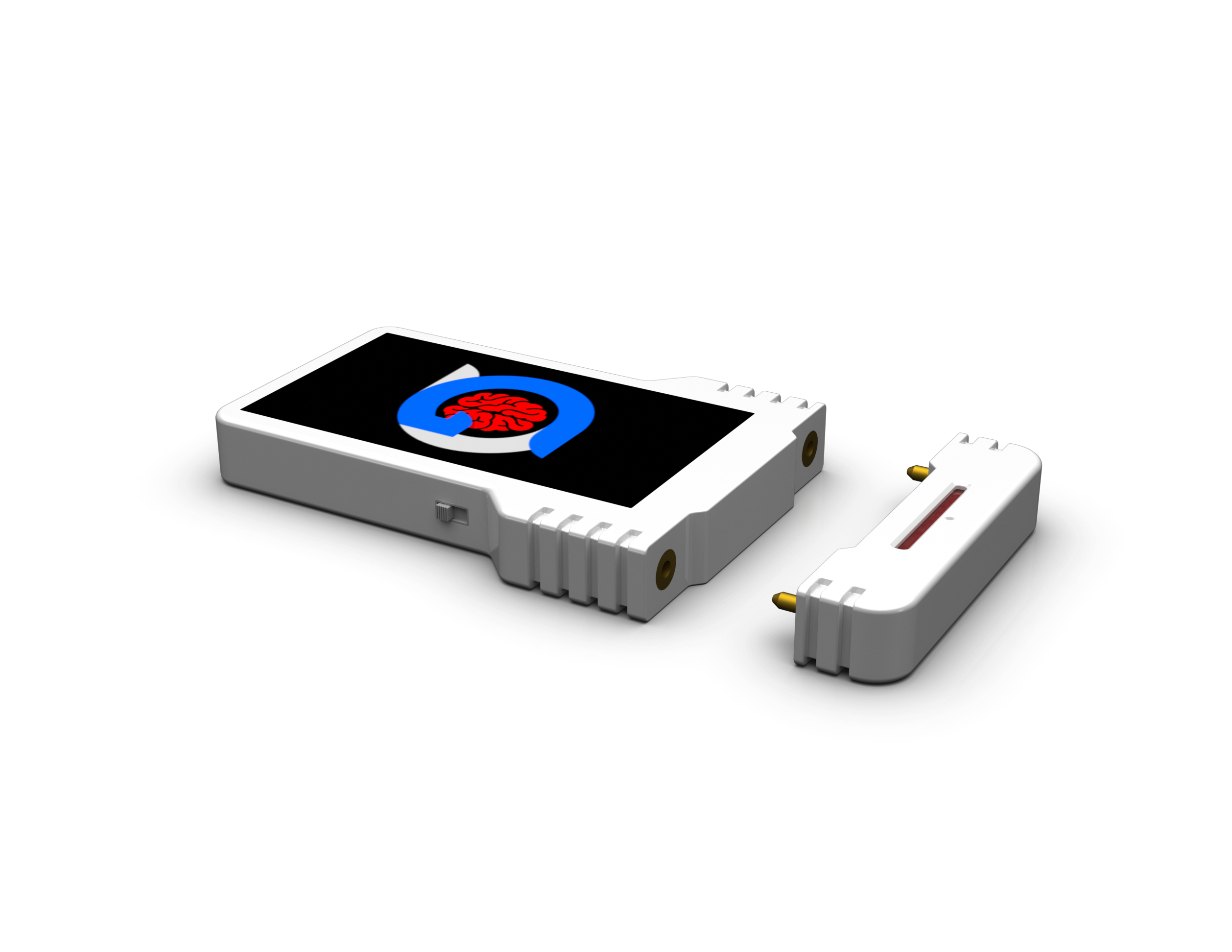
Explore further
Related topics
Elite Sport
How GLIA Diagnostics applies to professional and high-performance sporting environments.
Learn more →
TBI Biomarkers
The molecular science behind objective TBI detection — beyond symptom checklists.
Learn more →
microRNA Science
Brain-enriched miRNAs as direct indicators of neuronal damage from impact.
Learn more →
GLIA NeuroTESTA
The rapid point-of-care device designed for sideline and field deployment.
Learn more →
Objective diagnostics for every athlete, at every level
GLIA Diagnostics is developing a platform intended to close the access gap between elite and community sport. For investigational use only — not yet validated or approved for clinical use.
Explore the science